Showing posts with label serger. Show all posts

01 February, 2020

Cotton UnPaper Towels Out Of Double Gauze


Yes! I've returned to my blog.

I have felt long-winded lately on Instagram, writing too much necessary stuff with the full compliment of photos. Today, while I was serge-zipping around these Unpaper Towels, my mind told me, It Was Time.

Anyway, a friend recently contacted me through our local FB crafting page to see if I could sew some unpaper towels.

They are all over on Etsy, averaging $20 for a set of 5-12 napkin/paper-towel size pieces of cotton gauze with a colored serged edge.

On youtube, videos are still old-school using two pieces of quilting cotton and toweling to sew, turn, and top stitch. And then add snaps to connect them together.  haha. I can see kids re-snapping them back together (dirty or not), but ain't nobody got time for that kind of sewing around here.


At first, I was thinking Rolled Hem. After half an hour fiddling with settings and finally getting a stiff edge that was unevenly rolling (thanks to the single layer double gauze), I re-thought and re-set my machine to a regular 3-thread overlock stitch.

My first ones were carefully lifted and turned around the corners. Still thinking how etsy peoples can sell 5-12 for $20. Quickly moved on to the rounded corner. Gauze tends to pull and stretch, so I did have to slow down around the corners, and make sure material was next to my blade.


If you pull too much making a round corner, you end up serging into the air, or half on, half off.
See my photo above?? I can't show you the bad corner because I've been IG indoctrinated - only the good photos can be seen.


My understanding is these UnPaper Towels are better at absorbing spills and water after washing them 5-6 times. Plus, they get softer, while remaining strong.

Since I've flown over the paper tree plantations in Idaho, I also realize, these cost not only more $$ but also more resources to make the cotton cloth. Growing cotton is notorious for high chemicals in order to grow but also loads of water to process. Paper takes less resources. The bleaching is bad for the environment for both products.

Would I use these?

I already use cloth napkins. But I like paper towels for cleaning up bacon grease, the husband (who wipes first, then washes), etc. I usually buy the half-sheet paper towels.

These double gauze towels are similar in size and feel (single layer). If it was just me, maybe. But these items stain and will look fairly ratty in about 6 months. I would rather use colors to disguise stains. Do I even want to make more in six months?


I have no clue how etsy sellers are making money with these. They are all-over, so pricing is pretty cut-throat. It took me over two hours to make 16, including serger fiddling time. Once, I got my system in place, I whipped these up pretty fast.
Say an hour to do 12?

$6/yard - I'll say $3/yard wholesale. You can make 8-12 towels per yard. I made mine squarish and about 13".

I like to pay myself $20/hour, so obviously, I need to speed up the overlocker./serger.
Or, I could just buy some factory made birdseye gauze diapers instead.

Any thoughts? Would you use these in place of paper towels?

To see Etsy listings, google search "Unpaper Towels".


#unpapertowels
#clothtowels
#doublegauzetowel
#reusabletowel
#sewyourown
#rocketstitches

05 February, 2016

Winnings


I won a couple of giveaways lately.

I won $25 of Superior thread during Elm Street Quilt's BagIt series in December. It took me several weeks to where I could peruse the thread pages at Superior Threads to decide what to get.

In the end, I picked three serger cones to try and step up my serger thread game - I'm prone to using what's already threaded - as in black cones or white cones. By just changing the upper looper cone, I can add some pizazz.

The small spool is King Tut Quilting thread - made in Japan of longer staple cotton. It's a variegated thread that is very pretty to me.

It will, knowing me, take about four years to actually open the plastic wrap and use this. I have a penchant for new, shiny things and sometimes, you just have to pet new things for a bit while the perfect project percolates up to the surface.


 I didn't win the zippers - this etsy store, ZipIt,  is my personal fave for ordering zippers. They come *instantly* within two days and they always provide a free zipper pull for fun.


 SewMamaSew hosts a giveaway series in November - Handmade Holidays where you can see new sewing tutorials and also comment to win crafty books each day.


I won the new Cath Kidston book, SEW!, and it's a delight to drool over the pages and dream.


 My final pics are of a dish towel, I literally, figuratively, stumbled over at Fancy Tiger Crafts.

I wandered into the site from elsewhere, and found this $7.95 dish towel of awesomeness.


Cotton, printed with sewing and crafting notions. You have to pay shipping but it's still cheaper than the pineapple dish towel I bought in Hawaii. Or the ones my DD buys me from Alaska. I might have a thing for dish towels.

My significant other tends to wipe his mouth and hands first and then wash them (guys.)

My towels gets used wrongly so I need a lot of them. I love picking them up at estate sales for a buck (50 cents even) from that persons' travels around the world. Touristy towels tend to be pricey originally and made of linen and cotton.


I bought one to check quality. These may be bought again to use as gifts. Who doesn't need a new dish towel?


02 March, 2013

Computer Case


I was excited to learn how to serge a zipper on.
In my class we made a laptop case with a zippered compartment for the computer and another zippered pocket for "important papers".


Easier than you think. You need to use a polyester zipper that is longer than needed. We had a diagonal pocket on the front. Start with a rectangle and slice diagonally.
Open your zipper about 6". Align edge of zipper along diagonal line of material - RST. Serge about 4", then serge off the edge. Close the zipper and serge the remainder.


Flip fabric over and press zipper & fabric flat. Align small diagonal piece along other side of zipper- making sure when it is flipped up that you still have a rectangle of fabric.
Repeat serging technique: open zip ~6", serge part, serge off, close zip, serge remainder.

Press flat. Bar tack zip ends at edge of fabric.
The end of the case also has a zipper. This one is easier because you don't need to open/close the zipper.

Basically, you need to think thru the construction steps to find out if you can use your serger more.


We got to use new Huskylock servers from Viking/Huskavarna.

Caution: go slow thru the layers. Watch your pins and the metal zipper stops.

20 November, 2011

Forever Young by Puritan


On the way to  meet with Becky Ross of Project Runway (season 9) fame, I picked up a dress from my daughter. I came armed with a measuring tape and pins because she had called and wanted me to alter the dress for her. It turned out be a different type of altering.
She had bought this vintage dress at a thrift store. The dress itself is sheer with a navy blue background and one inch white polka  dots all over. She wears it with a tank top and tights. She wore it all summer. 


But the old sheer material was fraying all over the place. At least two extensive repairs had been made to contain the fraying seams.
 
I was taken with the sewn details. The collar starts at the back and drapes over to the front. So there is this interesting lapped detail at the back neck.
 
Back Collar neck detail (not ironed yet)

Two darts (one added as an alteration) at the front sleeve area helped shape the bust area.
The front skirt is flat at the front but has four pleats towards the side seam. The back skirt has four gores. The fit is flat at the waist and with the gores (backside) and the pleats (front side) - it brings together a nice full 50's skirt which falls just below the knee.
 
Front pleats

There is also back neck darts as well as back waist darts to keep the shape close to the body.
I could tell it was older because of the label and the seaming but looking it up on the internet gave some more details.


It was made for the Forever Young line probably back in the 50's. There is an interesting article about the fashion line over at the Vintage Fashion Guild. Apparently the dresses sold were licensed copies of European designers.

 My altering was basically to stablize the seams. My serger was threaded with black and I had recently finished working with my scarf which was also sheer and prone to fraying. I did a spot check on tension and settings and found them to be set just right for this material. One of the previous alterations had been done with white thread (on a dark blue fabric! -even if the dots are white - hhmmph!) and another was done with navy blue thread on one side and a light blue in the bobbin.  I decided I didn't want to unpick if I didn't have to and my black thread should be invisible next to those colors.
 
Serging. You can see the serged, stablized seam at upper left.
The serger cuts off the excess seam -mostly threads here- as it secures the seam.
The white thread is from a previous stablization attempt.
 
I started my serge at the hem and came up to the waist, tapering off before I reached the waist tape. I serged all four gores, then started on the top of the dress. The side seams, even the darts were really fraying so I hit them with the serger too. I did all the seams that were fraying and then used almost half a bottle of fraycheck to help with the seam stablization.
The skirt seams and the top seams all led to the waist seam - I finished serging here.
I re-hemmed the hem that was loose and I ironed a bit and it looked like a different dress inside.

***I don't have enough light in the house to take a full-on dress photo but you would not be able to see or appreciate the sheerness nor the design of this navy-blue dress with white polka dots.
Front button placket - where the collar-roll starts
I love my serger - it took less than an hour to do all the stablizing which consisted mainly of serging the seams and applying fraycheck.
The last two buttons (past knee) were re-sewn on wrong -gathering the material- but I elected not to fix those as doing so would create more holes that would fray. I didn't think it was that noticeable.
It's a stunning dress that would be interesting as a pattern because of all the details.
My daughter wants to wear this dress again and since it had been fixed before, I made the decision to use the serger to fix it this time.

All of the seams looked like this before I cleaned it up.


A further article about the House of Mod contained this interesting look-back at women's wear in 1965:
"In 1965, women could not wear trousers to dine at La Côte Basque—or to work in most offices. “You have to realize how square everything was,” says Schumacher. “When we opened, women were still wearing hats and gloves. There was even a union rule that no dress could be shipped unless it was a certain length.”"

17 April, 2011

Spring Sewing

 
I am playing with my serger today. I bought some interlock knit at Joann's a couple of weeks ago. Why is it so difficult to find knit fabrics - in stores in Oregon? I'm not up to ordering it on-line as I am still an old-school fabric buyer. I have to touch it, feel it, think about it.
Anyhow, I bought a yard of this knit at Joann's to make something for my great-niece Phea.  It shrank quite a bit in the pre-washing phase but that was okay - I didn't know what I was making for  Phea - yet.
I found Simplicity 7800 in my stash. I apparently made a size 4 for my daughter way back when but I have no memory of what I made or what it looked like. This time I am making size 3 for my size 2 niece. This pattern is for leggings in two lengths and a baby doll top with or w/o sleeves. I  have just over 3/4 yard after shrinkage but at least it is 60 inches wide. I managed to cut out the short leggings and the top without sleeves.


I love sewing for Phea. The seams are short and it doesn't take a lot of yardage. The leggings were quite easy to sew up. I am waiting for a measurement before I do the elastic waistband. Basically there are four seams: inner leg, crotch seam, hem and waistband seam.
I move on to the top and it comes together very nicely. 


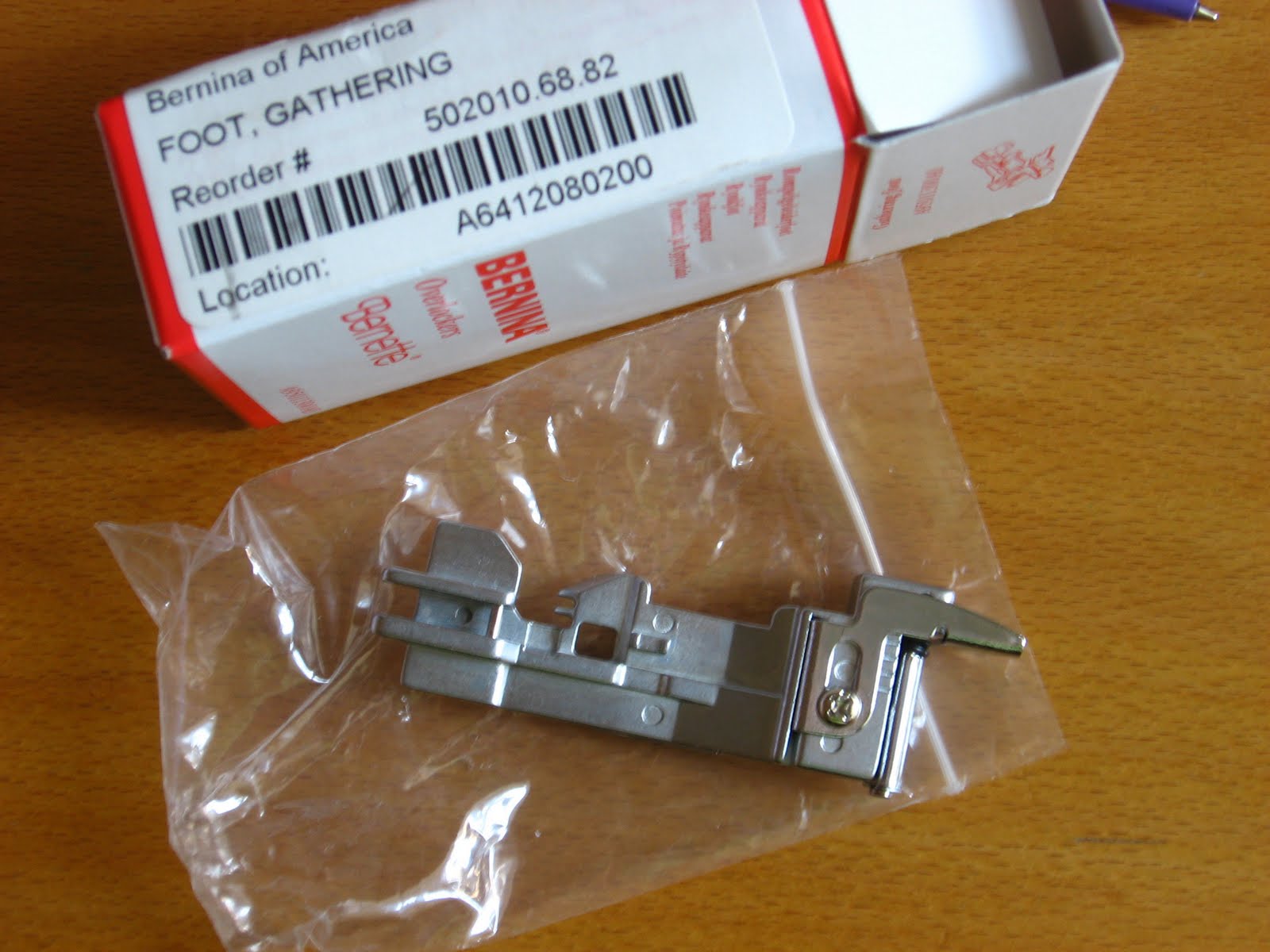
When I bought the serger last fall, the instructor showed us how to gather fabric - like for a ruffle. Or, you could use the gathering foot and it would gather the skirt to the bodice - as shown on my pattern. Well - it worked well on my sample piece but the reality? There are seams and a placket on the bodice that don't want to feed through the gathering foot. This made for a terrible uneven gathering.
In all probability, the dress is too long for my size 2 niece, so I simply cut off the 'mistake' and tried a different way to gather the skirt to the top. This knit stretches a lot so I actually am waiting for it to come out of the washer/dryer before I take photos in hopes that whereas I stretched out the top to meet the gathered skirt, it will magically retract into looking better.
(If not, we'll cut it off again and attach this gathered skirt the old-fashioned way with my regular sewing machine and a basting stitch).
Did I mention the seams are short?

not quite dry- pardon the wrinkles.
Missy Sophea can wear this as a set or mix and match. I think I made these more to play with my serger and figure out the possibilities. I think if I tried the gathering foot again, I would attach the skirt to the bodice before I sewed the side seams.


I found another food I tolerate quite well and I am surprised to be eating it. It's Seaweed.
My local store is amazing in the array of allergy-free foods they keep getting in. I spotted two brands of seaweed a couple of months ago and so far, no reactions. Of course, this comes from Korea, so we'll see if a little radiation gets through in the next few months?
( here's hoping this is a humorous comment . . .)


 I have been using the seaweed sheets to pick up my eggs on Sunday mornings. Eggs show up on both my food allergy panels but I have never reacted to eggs. I've challenged them numerous times over the last four years.
I remember going to an ethiopian restaurant where they didn't use utensils but instead used a thin bread to pick up the food.  I like to have eggs on Sundays to break up my protein cycle and seaweed is high in Vitamin A which adds up nutritionally to a good start to my week.


 The seaweed sheets are quite delicate, very thin and very flavorful. They are inexpensive (for allergy-free food) and very tasty.


And finally, I leave you with some of my tulips. 


19 December, 2010

Dog Beds & Christmas Presents

The dogs have been banished to the garage since the new wood floors went in. I not only love the new wood floors but I absolutely adore the NO DOG HAIR ZONE. Still - it is a hardship for Rocket & Rusty.
 We had a couch reupholstered and I am re-purposing the tired old cushions.
 Recovering a basic cushion isn't too difficult. All you need are two rectangles for the top and bottom. And one long strip for the sides. 

Since these are doggy beds, I am rough cutting. My rectangles were 22" and 24" on a side. I used a barely 1/2" seam as I planned to utilize my serger to whip these up super fast. 'Cuz you know, there are only five more days until Christmas. 
Anyway - this is how I cut the side piece. I needed this (sash) 4.5" wide and actually cut it 5" wide by laying my tape measure on the fabric and cutting to the tape measure. Then I would move the tape measure up and cut again to the tape.  I purposely cut the sash with less than 1/2" seam allowances so it would pull the fabric tight, --so there would not be any loose fabric for the dogs to worry on. (hope & pray)
 For two cushions, I needed three strips. I pieced two together to make one long sash but I did not cut it to length yet. I wanted to wait until I got all around the cushion. Now if this was a chair cushion that someone would actually critique, you would want to place this pieced seam on the back side of the cushion and possibly centered. Thankfully, in the name of last-minute projects, these are dog beds that the dogs will probably run around with their heads cut off and chew up in delight - so You Have To Get Real Here.

 In this photo, I have sewn one rectangle to the sash - all around. Where the sash seam is, I serged off about 1/2" beforehand. Then I pinched the fabric together to meet and serged up the sash seam. Then I stuck the fabric back under the serger foot and finished meeting the rectangle to the sash. Hope that made sense since I was doing it instead of taking photos with my left hand.
Just to help me in the next step of joining the second rectangle to all this, I stuck a pin in to mark the 'corners'.    Caution: Sergers and pins are bad.
 In my first cushion, my pieced seam and my corner ended up being almost in the same spot. The serger handled it all beautifully.
 I am about to turn a corner here.
 Don't (Do Not) forget to leave an opening to turn AND stuff your big old foam cushion in. I serged around the corners to the fourth side but left most of that  side seam open to hand-sew after I wrestled the cushion in. I love how the serger can finish off those single edges that will be hand-sewn closed.
 Wrestling. Groaning. Grunting. Foam cushions are quite dense and too-big-to-fit.


 To finish: I stuffed the cushion in and manually moved it into position, then I hand-sewed the opening closed

Rocket on the right had to be coaxed up to come lie on the cushion. He had already settled in for the night.
As you can see the dogs are much bigger than the cushions. Both of them rather like pillows and are always pawing up their rugs to make a head rest. If I get time, I have some four inch foam  I could make a Deluxe bed out of with an attached pillow. I am still getting used  to my serger and seeing what it can do.

25 September, 2010

Serging


On Friday, Pencil Girl and I went to the NW Quilt Show at the Expo.  We talked about taking the bus in and riding the yellow Max but time constraints made us drive in. Parking at the Expo is eight bucks now! I was so shocked.
 I expected this show to be more quilt related - which it is, but it had more to offer... We ended up spending a good five hours there - getting creatively charged up. And, getting a lot of catching up done.


Pencil Girl's necklace that she bought last year.


 One vendor was selling these t-shirts. With the extra fabric on the front, they were oddly 'stiff'. 
But you can see where they added a panel of fabric on top, sewed parallel lines at a diagonal angle and then took scissors to snip in-between the stitching lines.


This t-shirt on a sales person was from Anthropology. It's done with elastic thread. Kinda random and I think -done before the t-shirt is constructed. Elastic thread goes in the bobbin.


 I've been once to the Sister's Quilt Show.
This sponsoring fabric store is always worth going to. They have the cutest greeting cards which open up for a small project.

And - I bought my serger at this booth.
Yes - after forty years of sewing and making do, I now can play on my very own serger.

More Quilt Bug photos.